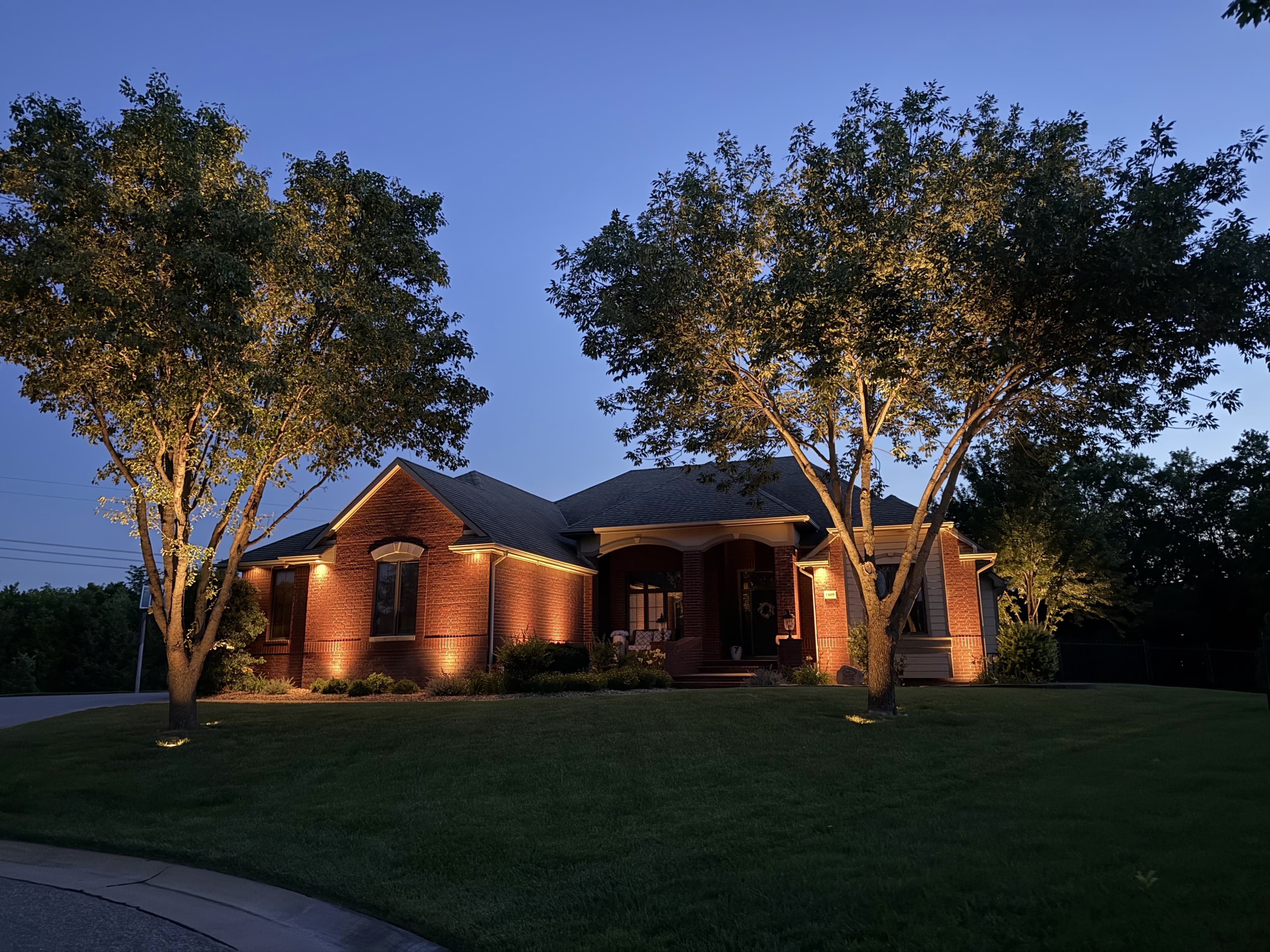
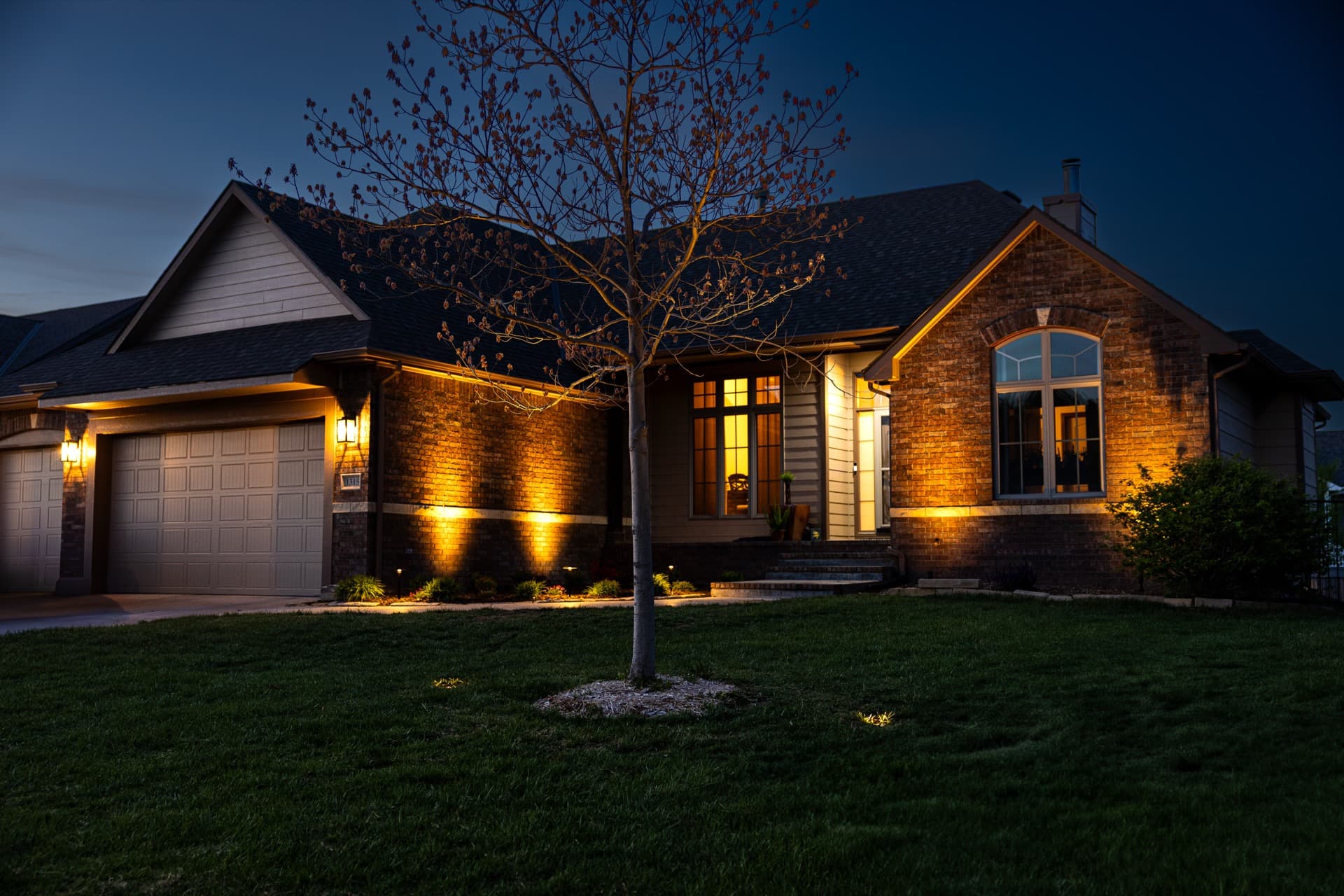
It is one of the first questions people ask when they see a lit-up yard: where does the power come from? The answer is simpler than most expect. A professional landscape lighting system typically starts at a regular outdoor outlet on the side of the house.
It starts at a regular outdoor outlet
The system plugs into a standard 110/120-volt outdoor outlet, the same kind you would use for a leaf blower or holiday lights. Outdoor outlets are typically GFCI-protected and should have a weatherproof cover that keeps the plug dry while it stays connected.
If there is not an outlet near where the transformer needs to go, that is something we look at during the walkthrough.
The transformer steps the power down
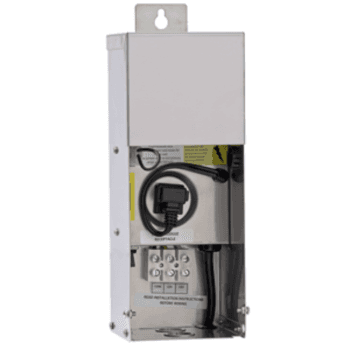
The transformer is a weatherproof box that mounts on an exterior wall or post next to the outlet. Its job is to take household power and step it down to low voltage, usually around 12 volts. It is the same basic idea as a phone charger, just built for the outdoors and sized for a whole yard.
The transformer is also where the controls live. Depending on the system, that can be a simple timer, a photocell that senses dusk, or a smart module that lets you run the lights from your phone.
Low-voltage cable carries it through the yard
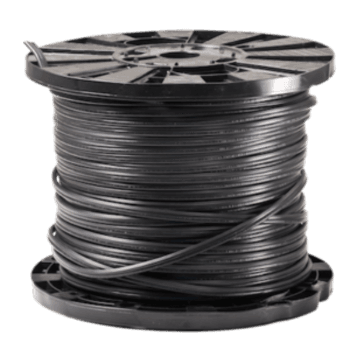
From the transformer, low-voltage cable runs through the landscape to each fixture. Because the voltage is so low, the cable only needs a shallow trench instead of the deep trenching and conduit a household circuit would need, and it disappears once the lawn and beds settle.
Long cable runs lose a little voltage along the way, so the wire size and layout are planned to keep every fixture on steady power. Done right, the last light on the line looks just as bright as the first.
LEDs barely draw any power
Older halogen landscape lights often used 20 to 50 watts per fixture. Today’s LED fixtures typically use only a few watts each, which is why a single transformer can typically power dozens of lights.
For a sense of scale, 20 LED fixtures at 4 watts each pull about 80 watts in total, roughly what one old 75-watt light bulb used. Even running from dusk to dawn, that works out to a few dollars a month at typical electricity rates.
It also gives the system room to grow. When the transformer is sized with some headroom, new lights can often be added later without adding another one.
Why low voltage is the standard
Low voltage is much safer to be around than household current, which is a big reason it is the standard for residential landscape lighting. Kids, pets, and anyone working in the garden are around 12-volt cable, not live household wiring. If a shovel ever catches a line, it is a repair job, not an emergency.
It also keeps the system flexible. Fixtures can be moved as plants grow, and new lights can be added without rewiring anything inside the house.
The short version
Household power comes from a regular outdoor outlet, the transformer steps it down to low voltage, buried cable carries it through the yard, and efficient LED fixtures turn it into light on a schedule you never have to think about.
It plugs into the wall like anything else. The craft is in where the light goes.
Your property is different
Let's build the plan around it.
We design and install outdoor lighting throughout Wichita and the surrounding area. The first conversation is free.
Schedule a Consultation