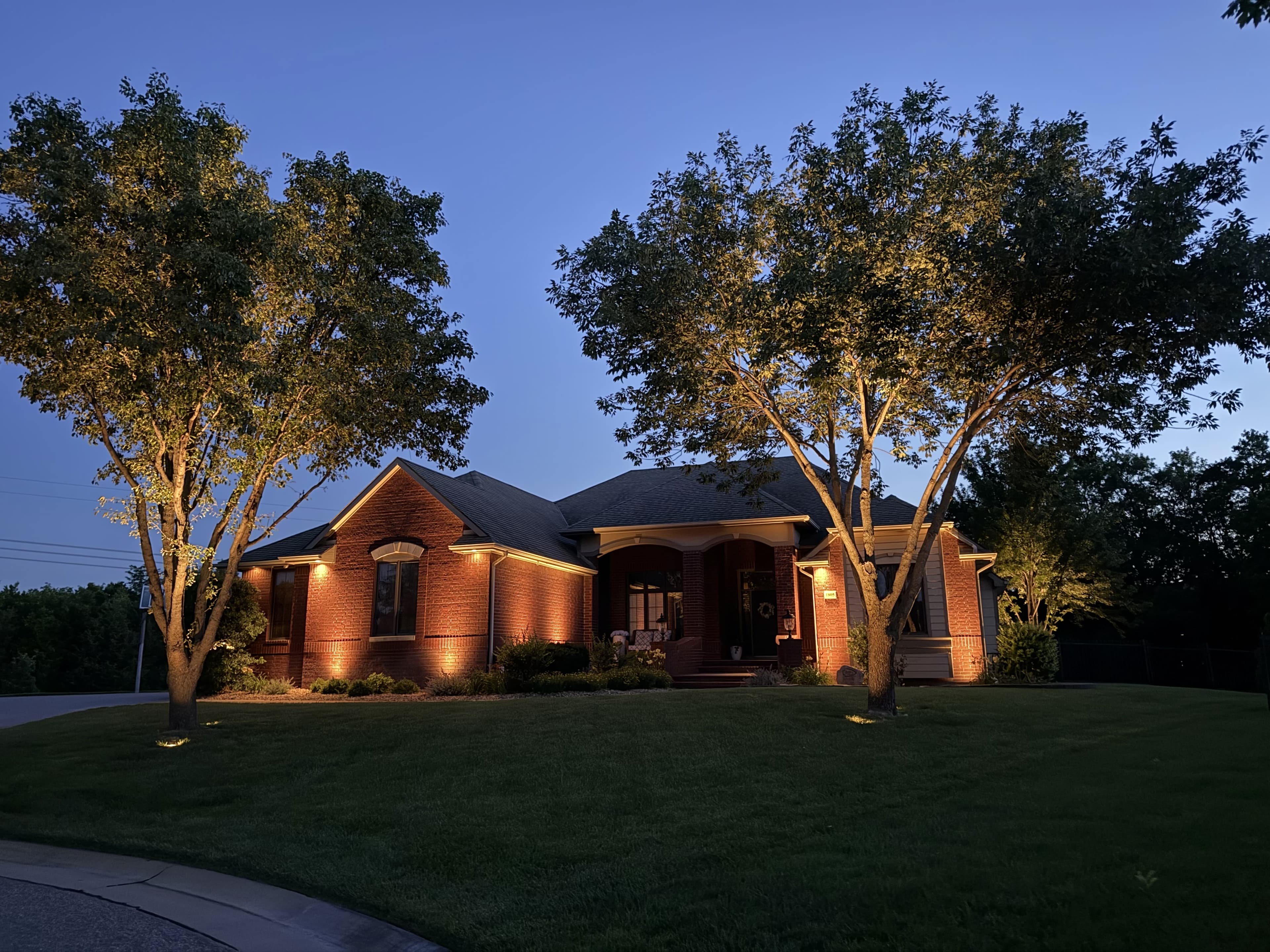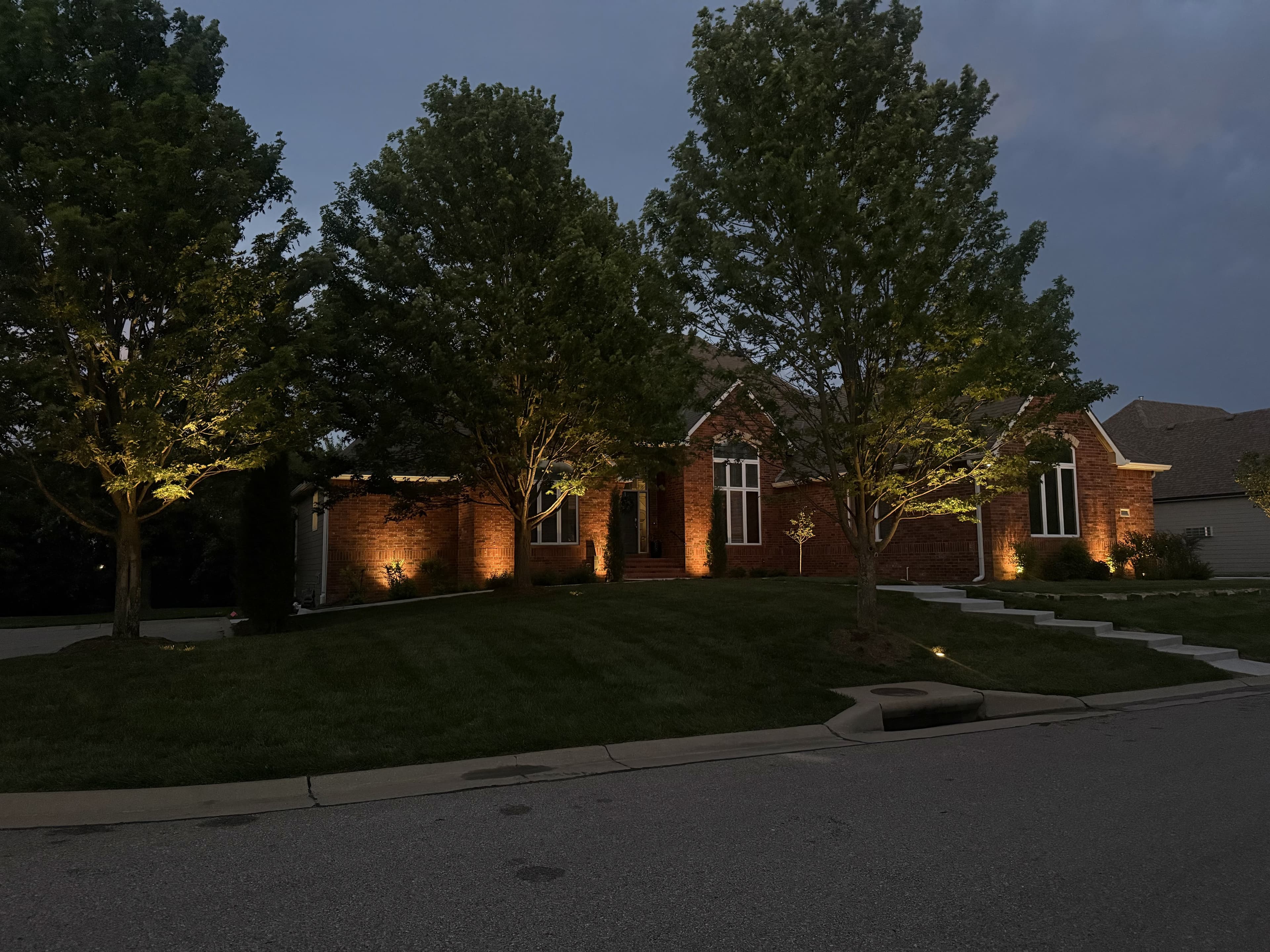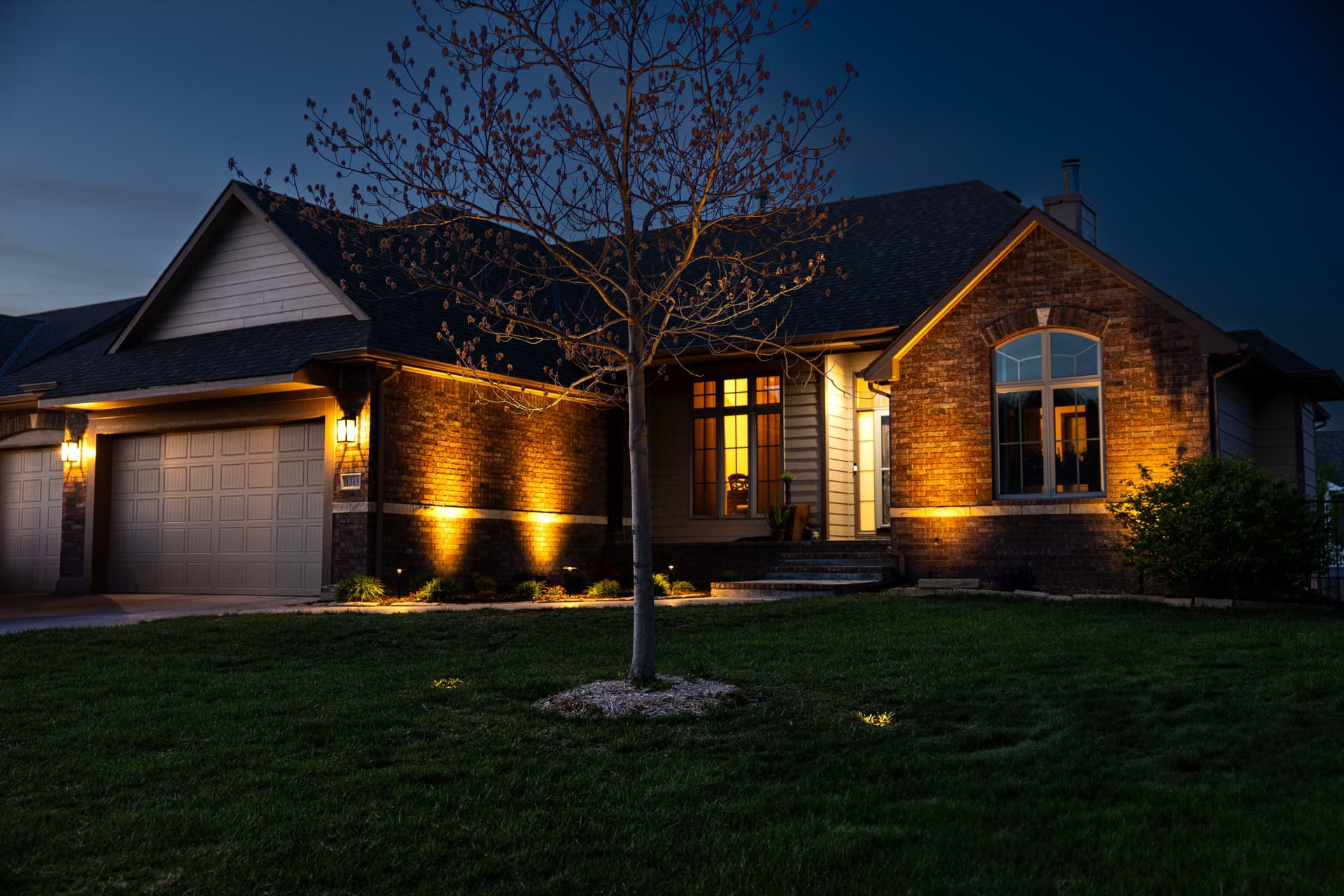
You can pick beautiful fixtures and put every one in the right place, but the color of the light still changes the whole result. For most homes, warmer light is what makes brick feel rich, landscaping feel natural, and an entry feel like somewhere you want to walk toward.
What “warm” actually means
Light color is described in Kelvin. Lower numbers look warmer and more amber; higher numbers move toward a cleaner, cooler white. For residential landscape lighting, 2700K is a common warm choice, while 3000K feels a little crisper.
Neither number is automatically right or wrong. The right choice depends on the materials, the surrounding light, and the mood you want. We simply find that warm light is a forgiving, natural place to start for a home.
Brick, stone, and wood come alive in warmer light
Wichita homes use plenty of brick and stone, and those materials already carry warm reds, browns, and creams. A warm beam tends to support those tones instead of bleaching them out.
The same is true for wood decks, cedar details, and many landscape beds. The light feels connected to the material rather than laid on top of it.
Plants should still look like plants
Cool light can make foliage look sharp and high-contrast. Sometimes that is useful, but across an entire yard it can also feel commercial. Warmer light keeps greens softer and helps the landscape sit comfortably beside the house.
If a special tree or water feature needs a different treatment, we can make that decision intentionally. We just avoid mixing color temperatures without a reason.
Consistency matters more than chasing a perfect number
A home with warm uplights, cool path lights, and a bright blue porch bulb will feel disconnected even if each fixture looks fine on its own. We look at the porch, soffits, coach lights, and neighboring light sources before settling on the landscape system.
Getting the whole scene into the same family is usually more important than debating a small difference on a specification sheet.
Our rule of thumb
Start warm, then adjust only where the architecture or use of the space calls for it. We want enough clarity to see texture and move safely, but not so much cool brightness that the home loses its sense of calm.
The best test happens at dusk on the actual property. Materials, beam angles, and nearby lighting can change what a color temperature looks like in real life.
Warm light is not about making everything orange. It is about letting the home feel like itself after sunset.
Your property is different
Let's build the plan around it.
We design and install outdoor lighting throughout Wichita and the surrounding area. The first conversation is free.
Schedule a consultation